
IdISBa Researchers Lead the Identification of a New Lipid “Fingerprint” of Colon Cancer
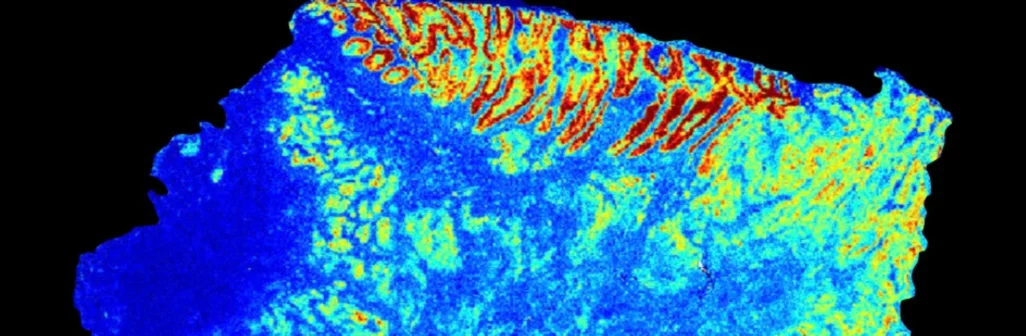
A study published in eBioMedicine identifies four types of tumor cells based on the lipids that make up their membranes, a finding that could help improve our understanding of how colon cancer develops and progresses.
A research team from the Health Research Institute of the Balearic Islands (IdISBa) has discovered that colon cancer cells exhibit different "lipid fingerprints", that is, distinct membrane compositions that reflect their degree of development and their role within the tumor. The findings have been published in eBioMedicine, a journal of The Lancet group.
To achieve this, the team developed a strategy that combines two technologies capable of analyzing tumor tissues at the molecular level. On the one hand, mass spectrometry imaging maps the distribution of hundreds of lipids across histological tissue sections. On the other hand, spatial transcriptomics identifies which genes are active at each specific location within the tissue. By integrating these approaches, the researchers identified four distinct lipid profiles that are not randomly distributed, but instead form defined regions within the tumor. Most importantly, these lipid fingerprints are associated with the degree of cell maturation, ranging from the most immature cells to fully specialized ones.
In addition, the researchers observed that metastatic lesions display their own characteristic lipid features, particularly those related to the metabolism of a fatty acid known as DHA (docosahexaenoic acid), one of the essential omega-3 fatty acids. This finding could help explain how cancer cells adapt and spread to other parts of the body.
According to the authors, the study demonstrates that membrane lipids are not merely a reflection of tumor metabolism, but constitute an additional layer of information with its own biological significance regarding the identity of cancer cells. This information complements the genomic and transcriptomic data already used in oncology. In the long term, this knowledge could contribute to the development of new diagnostic tools and more personalized treatments for patients with colon cancer.
The study was led by Ramón M. Rodriguez and Gwendolyn Barceló-Coblijn and involved researchers from IdISBa, Hospital Universitari Son Espases, the University of the Basque Country, IdiPAZ, and CIC bioGUNE.
We would like to express our special thanks to all the volunteer patients who participated in this study, as well as to the AECC-Balearic Islands Board for funding Dr. Ramón Mª Rodríguez's contract.
Article Reference
Rodriguez RM, Pérez-Romero K, Maimó-Barceló A, Ximelis T, Huergo-Baños C, Martínez MA, et al. Spatial membrane lipid remodelling encodes epithelial lineage and state in human colon cancer. eBioMedicine. 2026;132:106473. DOI: 10.1016/j.ebiom.2026.106473.