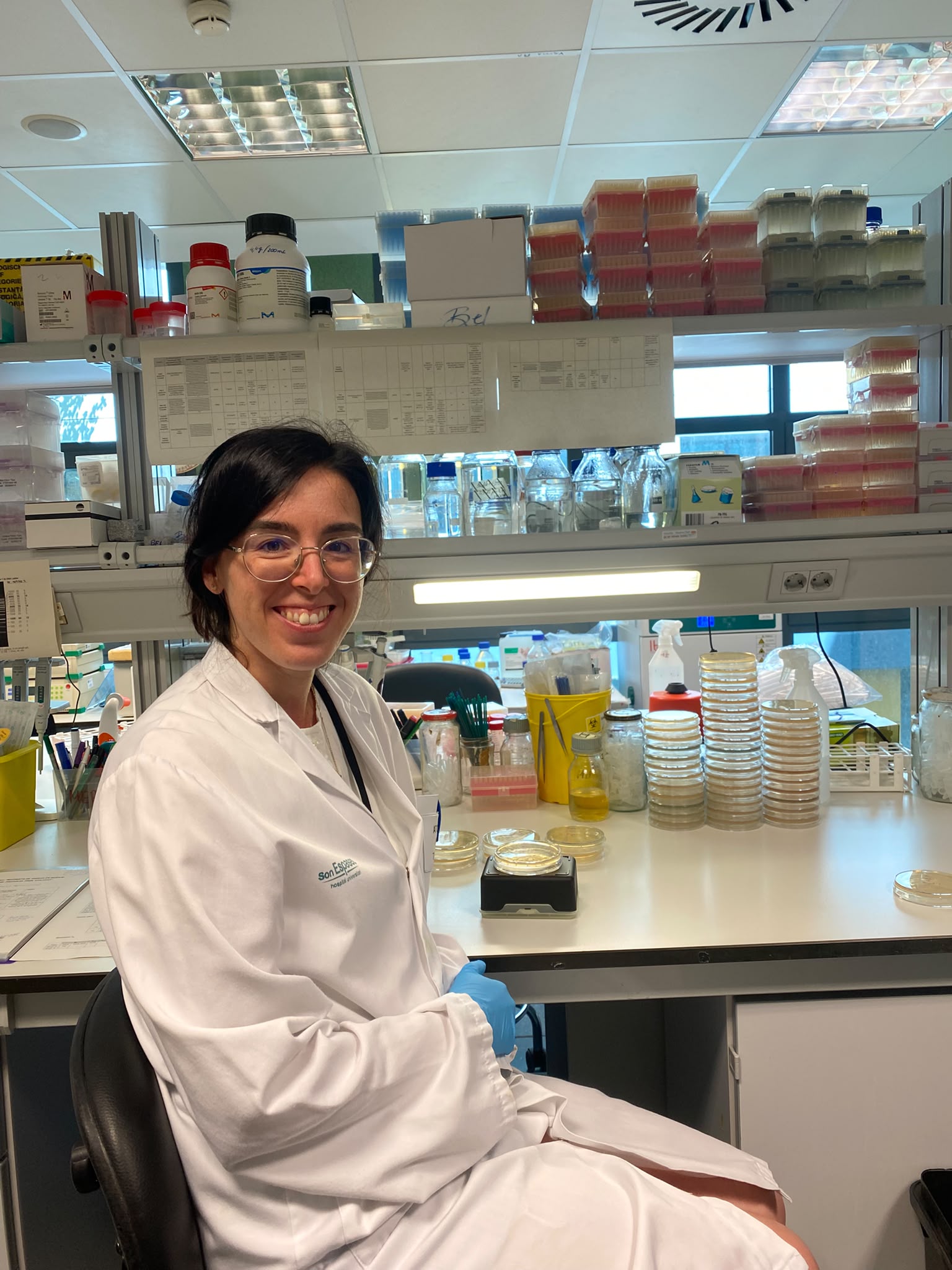
New staff member at IdISBa: Isabel María Barceló Munar joins the Antibiotic Resistance and Bacterial Infection Pathogenesis research group

IdISBa welcomes Isabel María Barceló Munar, who joins the Institute as a Researcher (Professional Group A) within the framework of project PI25/00805 (internal reference 2026-11-NAHUSE).
This full-time contract will run until 31 December 2028 and will be based at Son Espases University Hospital (HUSE) under the supervision of Carlos Juan Nicolau.
Isabel María Barceló Munar holds a Degree in Biochemistry and a Master's Degree in Advanced Microbiology, both obtained at the University of the Balearic Islands. Her academic background provides a strong scientific foundation for contributing to the study of bacterial infections and the mechanisms involved in antibiotic resistance.
She joins the Antibiotic Resistance and Bacterial Infection Pathogenesis research group, a strategic research area at IdISBa focused on understanding the molecular mechanisms that enable bacteria to develop resistance to antimicrobial treatments.
Advancing research on antimicrobial resistance
The incorporation of Isabel María Barceló Munar will strengthen research activities focused on clinically relevant bacterial pathogens and on the development of new strategies to prevent and combat antibiotic resistance.
Her scientific profile will support ongoing experimental and analytical activities, contributing specialised expertise in microbiology and molecular biology.
Strengthening biomedical research excellence
Antimicrobial resistance is recognised as one of the major health challenges of the 21st century. In this context, Isabel María Barceló Munar's appointment helps strengthen IdISBa's research capacity in this field and supports projects with direct impact on the diagnosis, prevention, and treatment of bacterial infections.
Through this new appointment, IdISBa continues its commitment to attracting research talent and strengthening its excellence research groups.
This contract is funded by the Carlos III Health Institute (ISCIII) through project "PI25/00805" and co-funded by the European Union.