
An AI Developed by IdISBa, Son Llàtzer University Hospital and the IIC Anticipates Sepsis and Reduces ICU Admissions by 4% and Hospital Stays
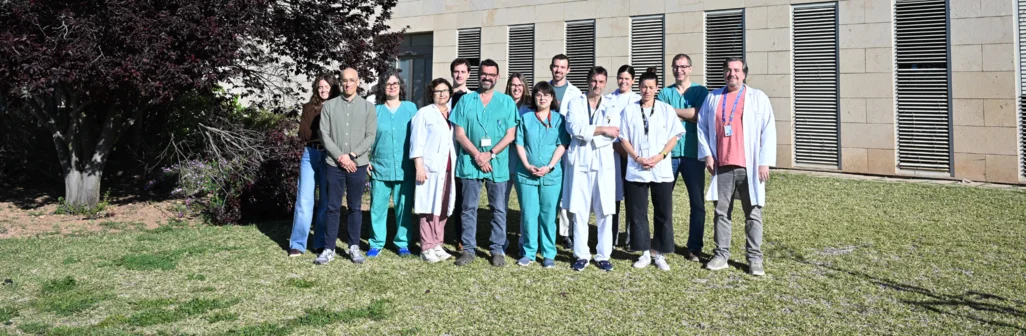
A study published in the scientific journal PLOS Global Public Health analyses the use of BIAlert Sepsis in more than 8,000 patients at Son Llàtzer University Hospital in Palma. BIAlert is the first Spanish system to integrate artificial intelligence (AI) into the early detection of sepsis, achieving a predictive accuracy of 96%. It is the result of a research project developed by IdISBa and Son Llàtzer University Hospital, in collaboration with the Knowledge Engineering Institute (IIC), a pioneering R&D&I centre in artificial intelligence and an expert in big data technologies for more than 35 years.
- During the period in which the tool was used, the average cost per hospital admission decreased from €26,517 to €24,630, while both intensive care and ward stays were shortened.
- Developed in Spain and currently implemented in three public hospitals, BIAlert Sepsis has obtained CE marking and continues to accumulate scientific evidence regarding its accuracy, performance and clinical and economic impact.
- Sepsis is a clinical syndrome caused by a bacterial, viral or fungal infection and is associated with high mortality: one in four people worldwide dies from sepsis, according to data from the World Health Organization (WHO).
The implementation of an artificial intelligence tool developed in Spain to predict the risk of sepsis up to 24 hours in advance has been associated with a 4% reduction in intensive care unit (ICU) admissions and a decrease of €1,887 in the average cost per hospital admission. These findings are reported in a study published in PLOS Global Public Health on the use of BIAlert Sepsis at Son Llàtzer University Hospital in Palma de Mallorca.
The study analysed outcomes from 8,039 patients with sepsis treated between January 2011 and June 2024. Researchers compared the period prior to the introduction of artificial intelligence, during which the hospital relied on a conventional rule-based detection system, with the period following the implementation of BIAlert Sepsis. Data from the COVID-19 pandemic were excluded to avoid distortion caused by the exceptional circumstances affecting hospital activity during that time.
During the period in which BIAlert Sepsis was used, the proportion of patients with sepsis admitted to the ICU decreased from 34.4% to 30.4%, representing a four-percentage-point reduction. In addition, average hospital length of stay was reduced by almost one day per patient.
"In sepsis, arriving earlier can change a patient's outcome. Identifying risk before clinical deterioration becomes evident allows healthcare professionals to assess patients sooner and make the necessary decisions to prevent progression to a more severe condition," explains Dr Marcio Borges, coordinator of the Multidisciplinary Sepsis Unit at Son Llàtzer University Hospital, president of the Sepsis Code Foundation, and principal investigator of BIAlert Sepsis.
BIAlert Sepsis is a clinical decision support system developed by the Knowledge Engineering Institute (Instituto de Ingeniería del Conocimiento, IIC) based on a research line led by Dr Marcio Borges at Son Llàtzer University Hospital, in collaboration with the Health Research Institute of the Balearic Islands (IdISBa) and the Balearic Islands Ministry of Health. The solution was trained using data from more than 200,000 Spanish patients.
The tool analyses in real time more than 70 clinical variables extracted from electronic health records, including laboratory test results, vital signs, demographic information and other relevant patient data. This information is updated every 30 minutes, enabling the system to estimate the risk of a patient developing sepsis within the following 24 hours.
When a high probability of sepsis is identified, the system generates an alert integrated into the software routinely used by healthcare professionals. In addition to indicating risk level, the alert displays the patient data that contributed to its activation. This enables physicians to interpret the warning, assess the patient and decide on the appropriate diagnostic tests, monitoring strategies or treatments.
BIAlert Sepsis does not replace clinical judgement. Healthcare professionals remain responsible for evaluating patients and determining the best course of action.
"The challenge is not only to develop a system that performs well, but also to ensure that it can be safely integrated into hospital systems, adapted to the specific characteristics of each healthcare centre, and provide useful and understandable information at the exact moment when professionals need to make decisions," says Elisa Martín, Director of the Health Area at the Knowledge Engineering Institute.
The Economic Impact of Early Detection
The PLOS Global Public Health study also assessed the economic impact of BIAlert Sepsis from the hospital's perspective. During the period of use, the average cost per admission fell from €26,517 to €24,630. This difference represents savings of €1,887 per patient, equivalent to a 7.1% reduction.
The authors also estimated the economic impact of using the tool over a five-year period, including both installation and maintenance costs. According to this projection, the initial investment could be recovered within the first year and generate cumulative savings of €3.55 million over five years, or €2.08 million under a more conservative scenario. These savings would result primarily from reduced hospital stays and lower consumption of healthcare resources.
"The findings demonstrate the value that early detection can provide even in a hospital with extensive experience in sepsis management. BIAlert Sepsis does not replace the Sepsis Code protocol or medical assessment; rather, it enhances the ability to identify deteriorating patients earlier and helps focus attention where risk is greatest," notes Dr Borges.
An Emergency Where Every Hour Counts
The publication of the study comes just ahead of World Sepsis Day, observed annually on 13 September to raise awareness of one of the leading causes of hospital mortality worldwide.
Sepsis occurs when the body's response to an infection becomes dysregulated and causes damage to its own organs. It can progress rapidly and may affect patients in any area of the hospital, not only emergency departments or intensive care units. Furthermore, its early symptoms are highly variable, making timely recognition particularly challenging.
In developed countries, it is estimated that one new case of severe sepsis occurs every day per 100,000 inhabitants. Its incidence increases by approximately 3% each year due to factors such as population ageing, the growing number of patients with multiple chronic conditions or weakened immune systems, and the increasing complexity of medical treatments and surgical procedures.
According to the World Health Organization, one in four people worldwide dies from sepsis. In 2017, there were an estimated 48.9 million cases of sepsis globally and approximately 11 million sepsis-related deaths, accounting for nearly 20% of all deaths recorded that year.
In Spain, around 170 hospitals operate a Sepsis Code protocol, designed to coordinate professionals and clinical services to facilitate early recognition and treatment. However, traditional detection systems rely on a limited set of clinical signs and laboratory results and may generate a high number of false alarms, making it more difficult for professionals to identify high-risk patients quickly.
Sepsis also places a substantial burden on healthcare resources. An international review estimated average hospital costs per patient between €17,158 and €53,349, depending on the country and healthcare system evaluated.
A Tool Supported by Growing Scientific Evidence
The newly published study expands the scientific evidence supporting BIAlert Sepsis. An earlier study, published in January 2026 in the Journal of Clinical Medicine, analysed 218,715 hospital episodes, including 11,864 cases of sepsis or septic shock confirmed in real time by the Multidisciplinary Sepsis Unit at Son Llàtzer University Hospital.
In that study, BIAlert Sepsis correctly identified 93 out of every 100 patients with sepsis and correctly ruled out the condition in 84 out of every 100 patients without sepsis. Furthermore, it generated nearly 40% fewer false alerts than the best traditional detection system against which it was compared.
Additional evidence is provided by a publication in the International Journal of Medical Informatics, which describes how BIAlert Sepsis is integrated into hospital information systems and electronic health records, as well as the mechanisms used to ensure that the tool maintains its performance over time.
"In healthcare artificial intelligence, it is essential not only to demonstrate that a tool performs well, but also that it can be safely incorporated into clinical practice and deliver real value for patient care," concludes Elisa Martín.
BIAlert Sepsis is CE-marked as a Class IIa medical device and is currently implemented in three Spanish public hospitals. In addition to Son Llàtzer University Hospital, it is now operating at Madrid's 12 de Octubre University Hospital and the University Hospital Complex of Albacete.
About the Knowledge Engineering Institute (IIC)
The Knowledge Engineering Institute is a leading organisation in artificial intelligence research and innovation in Spain, with more than 37 years of experience. Throughout its history, the IIC's core expertise has focused on data analysis across multiple sectors. Its Health Area transforms available medical information into actionable knowledge and develops AI tools that support medical decision-making and optimise healthcare resource management, contributing to the advancement of precision and personalised medicine.
References
[1] Giglio A, Macias-Fassio E, Salas-Sosa S, López D, Pruenza C, Morales A, et al. Prospective economic evaluation of a predictive artificial intelligence model for sepsis: Effects on hospital costs and return on investment. PLOS Global Public Health. 2026;6(8):e0006059. https://doi.org/10.1371/journal.pgph.0006059
[2] Borges-Sa M, Giglio A, Aranda M, Socias A, Del Castillo A, Pruenza C, et al. Hospital-Wide Sepsis Detection: A Machine Learning Model Based on Prospectively Expert-Validated Cohort. Journal of Clinical Medicine. 2026;15(2):855. https://doi.org/10.3390/jcm15020855
[3] Serrano García A, López D, Macias-Fassio E, Salas-Sosa S, Pascual I, Pruenza C, et al. From development to clinical practice: deployment of an interoperable and secure ML-based CDSS to aid in the early detection of sepsis. International Journal of Medical Informatics. 2026;219:106545. https://doi.org/10.1016/j.ijmedinf.2026.106545
[4] Rudd KE, Johnson SC, Agesa KM, Shackelford KA, Tsoi D, Kievlan DR, et al. Global, regional, and national sepsis incidence and mortality, 1990-2017: analysis for the Global Burden of Disease Study. The Lancet. 2020;395(10219):200-211. https://doi.org/10.1016/S0140-6736(19)32989-7
[5] Van den Berg M, Van Beuningen FE, Ter Maaten JC, Bouma HR. Hospital-related costs of sepsis around the world: A systematic review exploring the economic burden of sepsis. Journal of Critical Care. 2022;71:154096. https://doi.org/10.1016/j.jcrc.2022.154096
Latest relevant publications from the IdISBa Multidisciplinary Sepsis Group:
-
International Multidisciplinary Consensus Statement on Sepsis Code Guidelines: A Delphi Approach: https://pubmed.ncbi.nlm.nih.gov/42590856/
-
Activity and Outcomes of a Multidisciplinary Sepsis Unit: Fifty Thousand Consultations over Thirteen Years: https://pubmed.ncbi.nlm.nih.gov/42650662/
-
Hospital-Wide Sepsis Detection: A Machine Learning Model Based on a Prospectively Expert-Validated Cohort: https://pubmed.ncbi.nlm.nih.gov/41598793/