
IdISBa participates in an international study that opens the door to more personalized antibiotic treatments
Palma, 25 June 2026 - Research led by Monash University (Australia) and published in The Lancet Microbe sheds new light on how to combat severe infections caused by highly resistant bacteria. The study demonstrates that an unusual combination of two β‑lactam antibiotics can very efficiently kill Pseudomonas aeruginosa while also slowing the emergence of resistance. According to Dr. Antonio Oliver, co-author of the study, this is significant because "by identifying resistance characteristics through rapid diagnostics, tailoring therapy to both the pathogen and the patient becomes a very promising prospect."
The Health Research Institute of the Balearic Islands (IdISBa) has played a key role in this research through the Antibiotic Resistance and Pathogenesis of Bacterial Infections group, led by Dr. Oliver, also Head of the Microbiology Department at Son Espases.
A decade of scientific collaboration between IdISBa and Monash University
This project consolidates more than 10 years of continuous collaboration between Dr. Oliver's group and Monash University. Over this decade, both institutions have worked jointly on cutting-edge research in antimicrobial resistance, and this publication already represents their fifth joint project.
Innovative findings toward more personalized medicine
Using a laboratory‑validated infection system, the researchers simulated the real behaviour of antibiotics in hospitalized patients and developed an advanced computational model based on quantitative systems pharmacology (QSP). This model integrates bacterial genetic and resistance mechanisms to predict treatment response and pave the way for personalised therapy for each case.
Global impact in the fight against antimicrobial resistance
Antimicrobial resistance (AMR) is one of the world's major public health challenges, responsible for more than 1.27 million deaths in 2019. In this context, Pseudomonas aeruginosa is considered a critical pathogen by the WHO, as it can develop resistance to practically all individually administered antibiotics. The results of this study reinforce the need to combine treatments and use advanced modelling tools to combat infections that have so far been very difficult to treat.
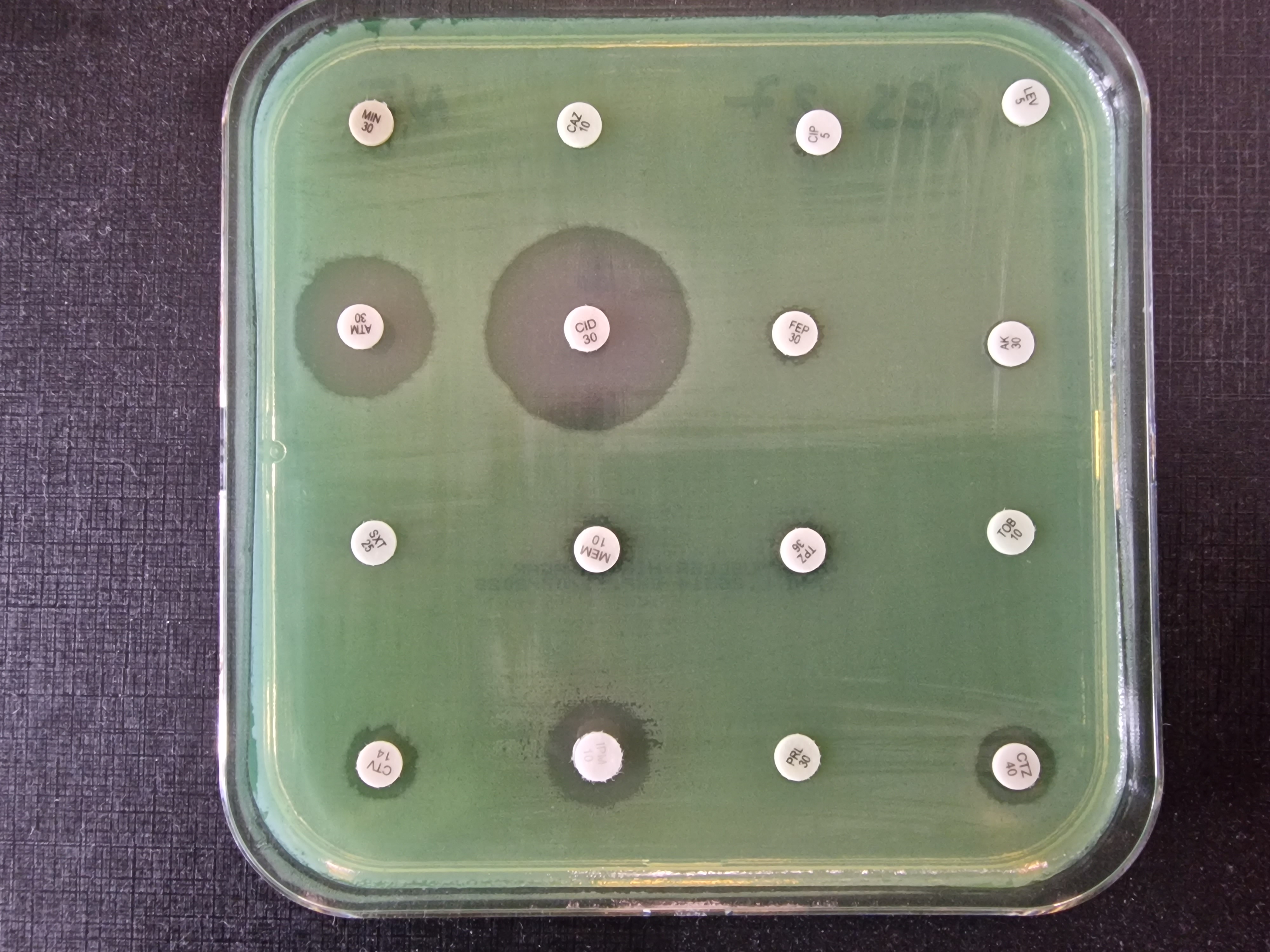 Antibiograma de Pseudomonas