
IdISBa–Son Espases leads an international breakthrough in the prediction of antibiotic resistance through genomic sequencing
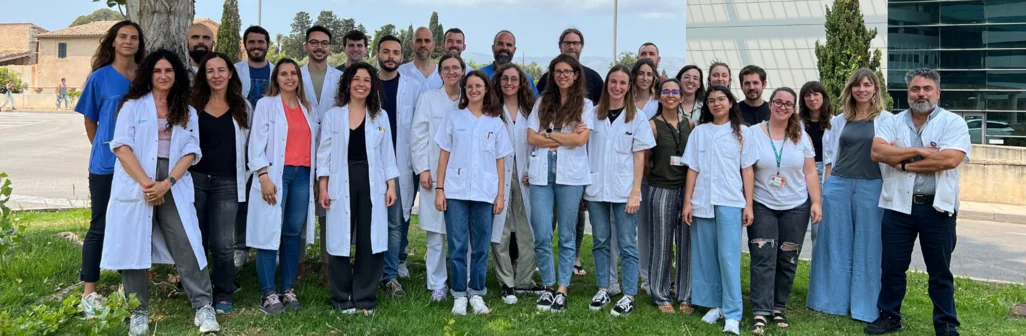
Researchers from Mallorca, integrated into CIBERINFEC -the Biomedical Research Networking Center on Infectious Diseases, a national structure that coordinates leading groups in this field-, are driving a European consensus on the use of bacterial DNA to improve treatments.
Dr. Antonio Oliver and Dr. Carla López, from the Microbiology Service at Hospital Universitari Son Espases and the Antibiotic resistance and pathogenesis of bacterial infections group at IdISBa, serve as chair and scientific secretary, respectively, of the EUCAST (European Committee on Antimicrobial Susceptibility Testing) subcommittee on predicting antimicrobial susceptibility through genomic sequencing, a European reference body linked to the EMA and ESCMID.
Both researchers have led the development of a recently published international consensus document, the result of several years of work, involving 27 experts from around the world, including Rafael Cantón (Hospital Ramón y Cajal, CIBERINFEC).
Reading bacterial "DNA" to improve treatments
The document outlines the progress achieved over the past decade in the use of genomic sequencing, a technology that enables the analysis of bacterial DNA to identify genes responsible for antibiotic resistance.
This approach represents a paradigm shift: instead of testing in the laboratory which antibiotics are effective-a process that can take several days-genomic sequencing makes it possible to "read" the microorganism's genetic information and more rapidly predict whether it will be resistant or susceptible to specific treatments.
This opens the door to faster and more precise diagnostics, facilitating the early selection of the most appropriate antibiotic for each patient.
Scientific and technological advances
The report highlights significant progress in understanding the genetic basis of antibiotic resistance, as well as in the development of bioinformatics tools, databases and analytical systems, including the growing role of artificial intelligence in the interpretation of genomic data.
These advances improve predictive capacity and bring closer the possibility of incorporating this technology into routine clinical practice.
Challenges for clinical implementation
Despite these advances, the document also identifies challenges that still need to be addressed before widespread implementation in clinical microbiology laboratories. These include:
· The need to standardize methods and ensure quality control
· The development of harmonized global databases
· Cost reduction
· Improved turnaround times
Towards precision medicine against antibiotic resistance
The application of genomic sequencing in clinical microbiology represents a key tool for advancing towards a precision medicine model, in which treatments are tailored to the specific characteristics of both the pathogen and the patient.
In a context of increasing antibiotic resistance, this approach can significantly contribute to optimizing treatments, improving clinical outcomes and addressing one of the major challenges in global health.
Grad YH, Hamprecht A, Haussler S, Holt KE, Hopkins KL, Howden BP, Jeannot K, Kahlmeter G, Köser CU, Mathers AJ, Naas T, Pournaras S, Ruppé E, Schön T, Stoesser N, Turnidge J, Werner G, Wright GD, Giske CG, Oliver A. Clin Microbiol Infect. May 15, 2026:S1198-743X(26)00248-X. doi: 10.1016/j.cmi.2026.05.012. Online ahead of print. PMID: 42142806