
IdISBa and AbbVie Explore Emerging Trends in Clinical Research, Artificial Intelligence and Decentralized Trials
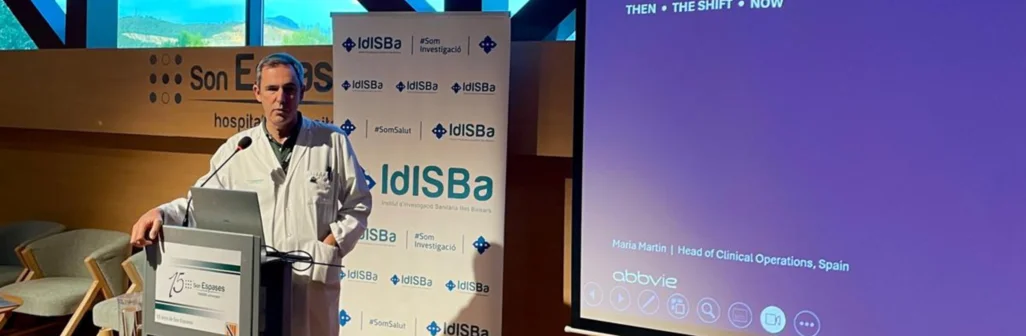
This morning, the Clinical Research Update Conference was held at Son Espases University Hospital, jointly organized by the Health Research Institute of the Balearic Islands (IdISBa) and the pharmaceutical company AbbVie. The event focused on some of the current trends in pharmaceutical and clinical research, including the application of artificial intelligence and decentralized clinical trials.
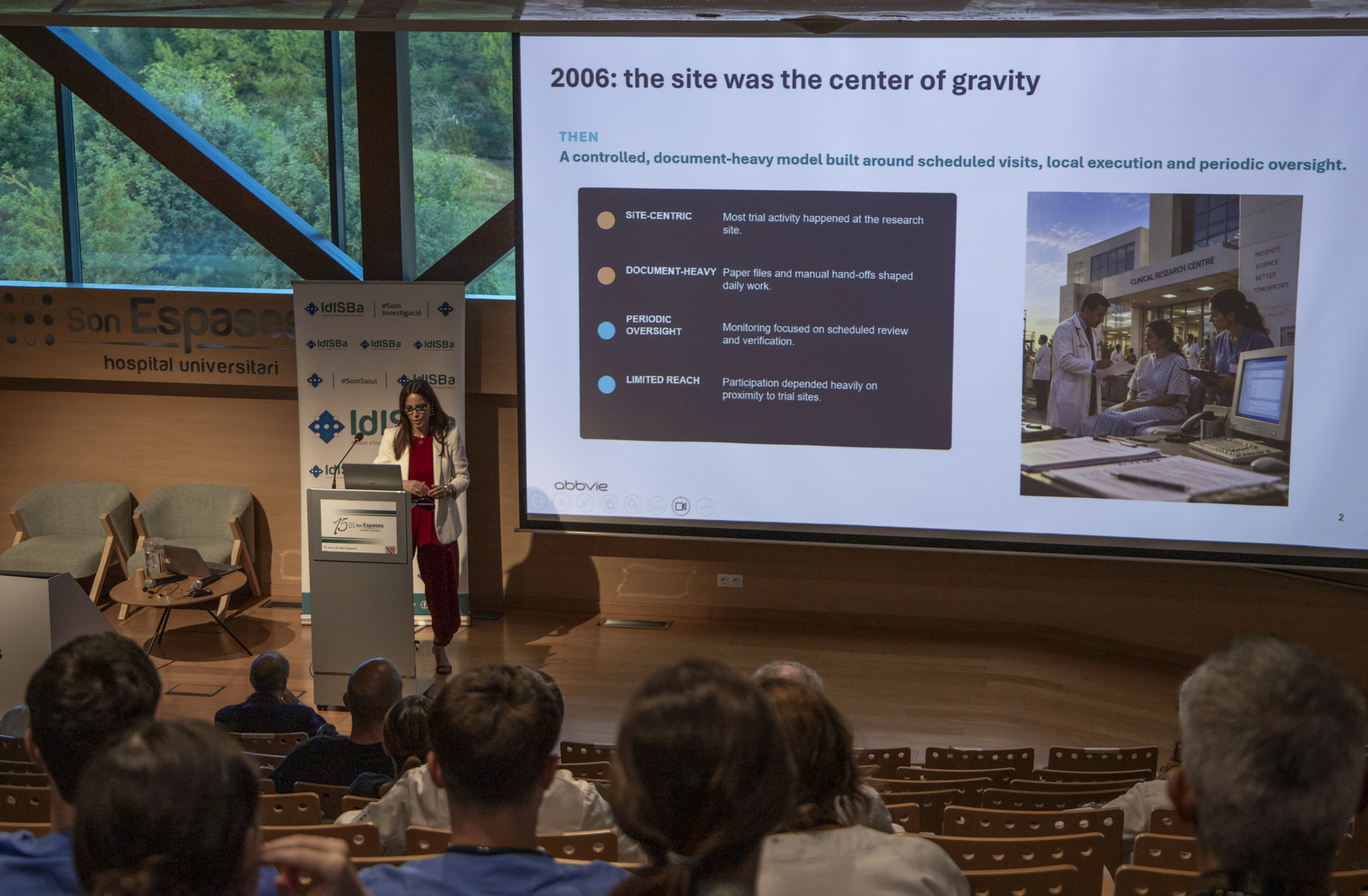
The conference was divided into two sessions. The first, held in the Assembly Hall of Son Espases University Hospital, addressed current perspectives on pharmaceutical and clinical R&D from the industry's point of view. The session was led by María Martín, Country Clinical Operations Head at AbbVie R&D. Martín reviewed the evolution of clinical trials over the past 20 years, highlighting the shift from hospital-centred clinical research to an approach focused on patients' needs.
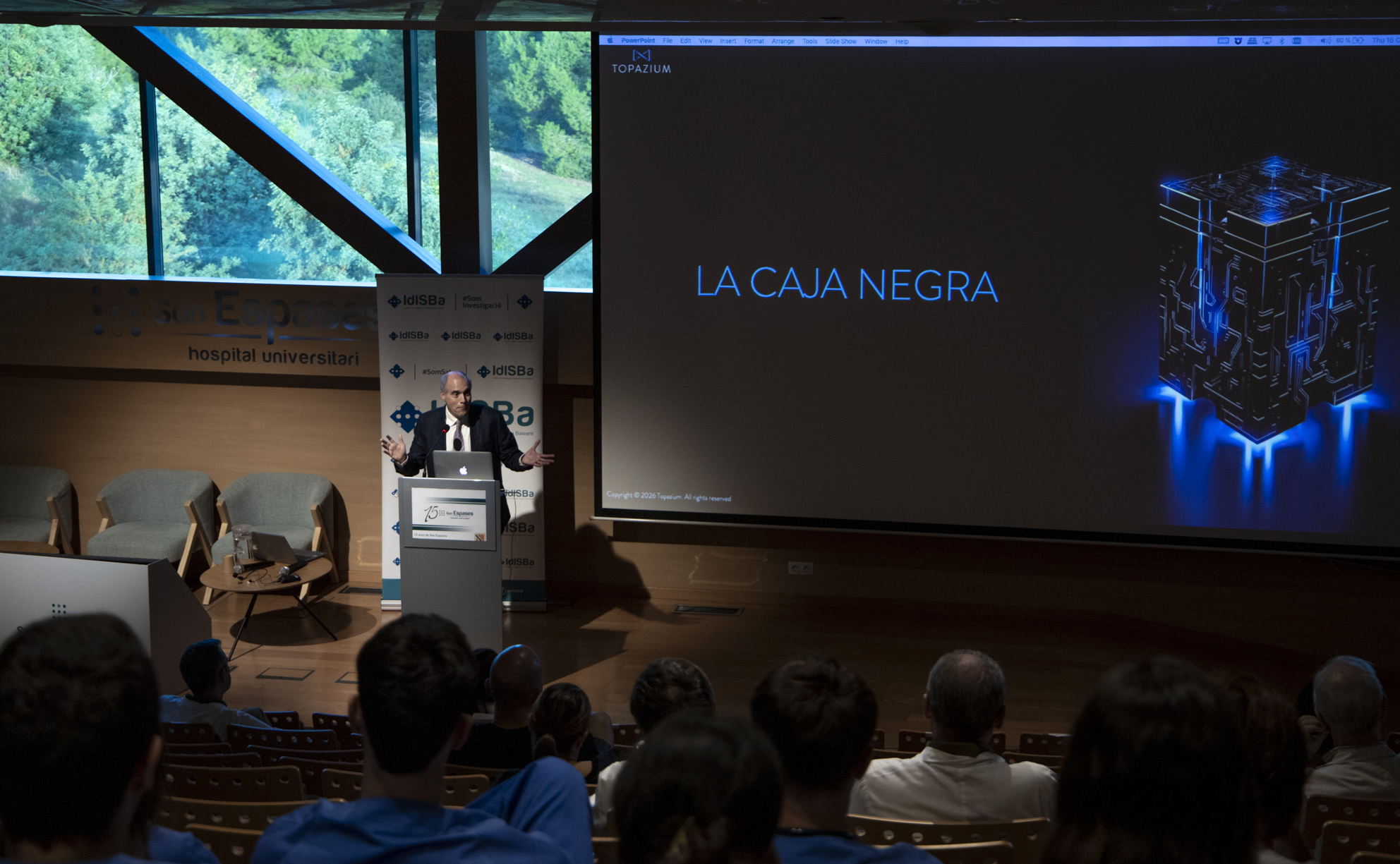
Next, Carlos M. Galmarini, Founder and CEO of Topazium Artificial Intelligence, discussed the role and potential of artificial intelligence in research. "Medicine is based on the relationship between a physician and a patient: one places complete trust in the other, who has the knowledge to help them," Galmarini stated. Building on this principle, he explained how AI offers multiple tools to strengthen this relationship and enhance healthcare professionals' ability to treat their patients, illustrating his talk with several real-world examples developed by his company.
The second session, held in the classrooms of Son Espases University Hospital and requiring prior registration, focused on decentralized clinical trials. Cristina Montero, Clinical Operations Manager at AbbVie R&D, explained what these trials are, how they are implemented, and the key aspects that must be considered in their development.
The conference provided a valuable forum for updating knowledge and exchanging experiences on new approaches and tools that are transforming clinical research. It also offered healthcare and research professionals different perspectives on the evolution of pharmaceutical R&D, the applications of artificial intelligence, and emerging models of clinical trials.